GP2025 Session: Strengthening SME Resilience through ARISE Networks
CCV (Varembé Conference Centre) Room Montreux
Time
10:30 – 12:00 am (CET)
Target audience
Small- and medium-sized enterprises (SMEs), larger national and multi-national companies, business associations, and other interested stakeholders
Session overview
According to the World Economic Forum, small- and medium-sized enterprises (SMEs) represent roughly 90% of all firms and are responsible for 50% - even 60% - of employment worldwide. Yet when a disaster strikes, SMEs are hit harder, suffer longer, and are slower to recover than larger businesses.
UNDRR and ARISE Private Sector Alliance for Disaster Resilience Networks recognize that a better prepared private sector strengthens the resilience of the whole society, yet collective experience has shown that further action is needed to help businesses – SMEs in particular - adopt risk-informed business strategies and embed adaptability into their decision-making. Hence many ARISE Networks have developed resources and offer capacity development trainings to SMEs on disaster risk reduction and climate change adaptation. UNDRR is also implementing a project with MCR2030 Resilient Cities Hubs and ARISE Networks and/or chambers of commerce in Bridgetown (Barbados), Barcelona (Spain) and Sendai (Japan) to strengthen the disaster resilience of SMEs in, focusing particularly on business continuity planning for climate and disaster resilience.
This session – organized during the second preparatory day of the 8th Session of the Global Platform for Disaster Risk Reduction (GP2025) – explores ways how SMEs can play a positive role and be further capacitated to contribute to disaster risk reduction efforts. Participants will discuss how local and national governments, civil society organizations and other private sector entities can further leverage the existing capacities and core strengths of SMEs but also help them futureproof their business models, hence improving the effectiveness and long-term sustainability of all resilience building interventions.
Format
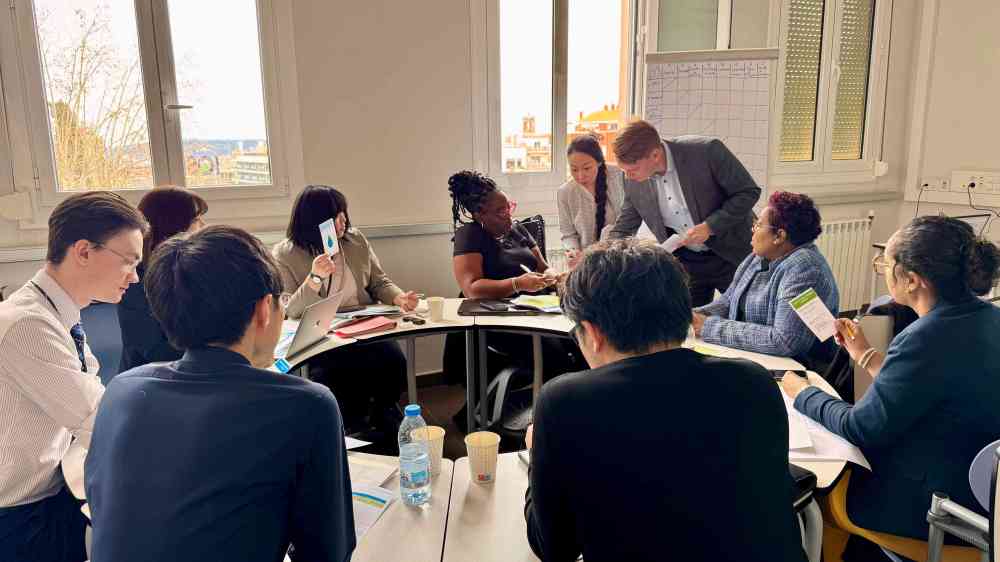
The session will be structured around a few “firestarter” interventions to kick start conversations that fuel action, followed by interactive and rotating discussions that enable participants to share insights and lessons learned, as well as suggest a way forward, across all topics.
Agenda
10:30 – 10:35 Welcome and opening remarks
10:35 – 11:35 Firestarter interventions followed by rotating discussions
- Improving access to finance and insurance
- Creating resilient business models / business continuity planning
- Leveraging technology for DRR and resilience
- Fostering public-private partnerships