Barcelona outlines a collaborative roadmap to strengthen SME resilience
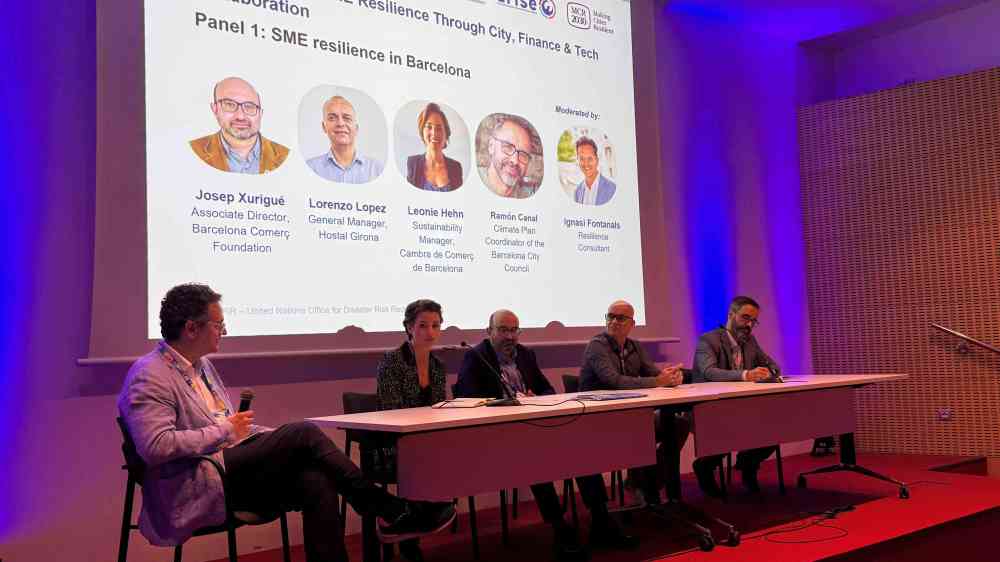
Barcelona, 7 November 2025 - The 2025 Iberian blackout plunged Barcelona into darkness and forced thousands of small businesses - from hotels to bakeries - to make split-second decisions: sending staff home, protecting perishable goods, and closing their doors in the dark. It also served as a wake-up call: small and medium-sized enterprises (SMEs), the backbone of the city's economy and neighborhood life, lost an estimated €878 million, exposing major gaps in business continuity planning, and resources, time, or technical capacities for crisis preparedness. The event came less than a year after the devastating Mediterranean DANA storm of late 2024, which caused catastrophic flooding across Valencia and neighboring regions, resulting in losses estimated at €18 billion. Together, these crises underscored the growing vulnerability of urban economies in southern Europe to both infrastructure failures and extreme weather events, and highlighted the need for coordinated, comprehensive resilience strategies that leverage public-private partnerships.
Against this backdrop, resilience leaders from cities and business convened at the Smart City Expo World Congress (4-6 November) to outline a new collaborative roadmap for SME resilience in Barcelona, and beyond. Representatives from the Barcelona City Council, Barcelona Chamber of Commerce, Barcelona Comerç Foundation, AGERS, Mitiga Solutions, UNDRR, Syngenta Group, ARISE Colombia, Athens Digital Development Agency (DAEM), and local business owners explored how public-private collaboration can help prevent future disruptions.
In his keynote remarks, Ramón Canal, the Climate Plan Coordinator at Barcelona City Council, stressed the importance of integrating SME resilience into the city's Climate Plan.
"Protecting SMEs means protecting our communities," said Josep Xurigué of Barcelona Comerç Foundation, underscoring the social and economic importance of small businesses.
Leonie Hehn from the Barcelona Chamber of Commerce called for stronger coordination between municipal resilience policies and business-support services, particularly in the retail and tourism sectors, highlighting the importance of collaborating with the City Council and UNDRR, building on the ongoing SME resilience project.
Edgar Garcia from AGERS and Alejandro Marti from Mitiga Solutions stressed the need to democratize risk intelligence and disaster risk management - providing smaller businesses with the same data and tools to support decision-making. Laurent Giezendanner from Syngenta Group highlighted the Resilience Maturity Assessment (ReMA) as one tool that enables even small businesses to understand and improve their resilience practices.
Lazaros Karaoulis, CEO of the Athens Development Agency for Digital Policy (DAEM) outlined that the city of Athens is designing online platforms that help local businesses assess risks, access real-time alerts, and connect with emergency support systems.
Yet several speakers also noted that incentives for SME resilience remain insufficient; for instance, financing solutions are often unavailable or inaccessible to smaller businesses. Strengthening climate intelligence and analytics can therefore play a key role in designing financial and risk-management products that are more relevant, affordable, and tailored to SME needs. Lorenzo López, a small business owner in Barcelona, offered an important reminder: "Resilience is not built only with technology or infrastructure." He emphasized that people must also have the skills and training to use new technologies effectively if they are to truly strengthen the resilience of their organizations.
Building a culture of preparedness
Participants agreed that business resilience must be embedded in Barcelona's - or any city's - wider urban resilience, sustainability and competitiveness agendas, emphasizing key areas such as:
- Simpler, affordable tools to assess vulnerabilities and improve business continuity planning
- Crisis simulations and practical training to enhance anticipation and adaptation
- Financial incentives such as microcredit schemes and insurance products that reward preparedness and proactive disaster risk management.
Barcelona-based stakeholders also expressed particular interest in exploring the ARISE model presented by Adriana Solano Luque from ARISE Colombia as a powerful example of a private sector network that leverages public-private partnerships, coordinates with business associations and local authorities, and provides knowledge-sharing platforms to exchange challenges and strategies in risk management.
The discussion concluded with broad interest in replicating Barcelona's experience on SME resilience in other cities and regions of the world, leveraging its partnerships and methodologies to strengthen local economies worldwide.
About the project
The "Strengthening the Disaster Resilience of SMEs" project seeks to mobilize public, private and other relevant sectors of society to build SME capacity for risk-informed decision-making. The project's interventions include landscaping studies, the development of Business Continuity Plans, training programs and impact stories, ultimately benefiting SMEs across the target cities - Barcelona (Spain), Bridgetown (Barbados), and Sendai (Japan).
In Barcelona, the initiative has brought together the Barcelona City Council, Barcelona Chamber of Commerce, Barcelona Comerç, AGERS, Mitiga Solutions, UNDRR, and the ARISE Private Sector Alliance for Disaster Resilient Societies, along with businesses, insurers, financial institutions, and civil-society organisations. These partners have promoted and co-developed approaches that help SMEs withstand, adapt to, and recover from disruptions such as blackouts, floods, and heatwaves - contributing to a more resilient and inclusive city. More specifically, since early 2025, the SME resilience project has:
- Surveyed 67 SMEs to identify resilience priorities
- Trained over 100 SMEs on developing business continuity plans (BCP) and conducting crisis simulation exercises
- Supported 30+ SMEs in drafting BCPs
- Developed sector-specific guidance for tourism SMEs and SME access to finance.
Following the SCEWC event, partners are now actively exploring the feasibility of creating an "SME resilience alliance", a multi-stakeholder structure that would make resilience available, accessible, practical and profitable for micro-, small and medium enterprises in Barcelona beyond the project's duration.