Sendai City pilots care sector resilience under UNDRR’s SME resilience project
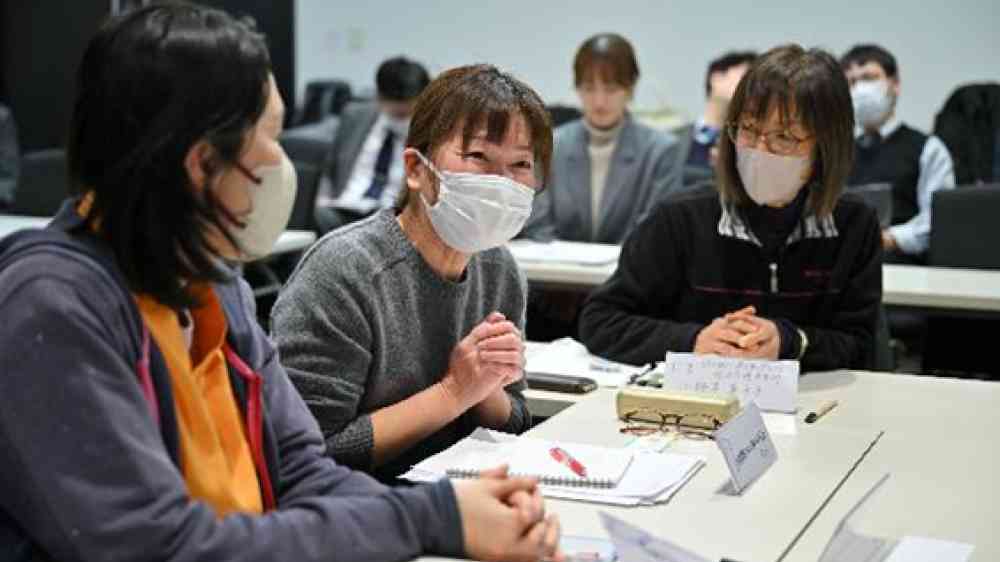
Sendai-city, 28 January 2026 As part of the UNDRR initiative on Strengthening the disaster resilience of SMEs, a half-day Business Continuity Planning (BCP) seminar was held on 28 January 2026, bringing together 38 participants representing 36 small and medium-sized enterprises in the welfare and nursing care sector.
Organized by Sendai City with support from UNDRR, the workshop focused on the specific operational risks faced by care providers. In particular, it addressed the 2024 revisions to nursing care service fees and disability welfare service fees in Japan, which introduced mandatory requirements for BCP development across the sector. The session offered participating organizations a practical opportunity to review and strengthen their existing continuity plans. The initiative reflects Sendai City’s role, alongside Barcelona and Bridgetown, in advancing SME resilience across different sectors.
Ms. Yuki Matsuoka, Head of the UNDRR Kobe Office, underscored that the seminar translates inclusive disaster risk reduction principles into operational practice. She highlighted that care sector BCPs are a frontline mechanism for ensuring that older persons and persons with disabilities are not left behind, aligning with Japan’s strengthened policy requirements for continuity planning in care facilities. Participants were encouraged to reframe BCPs not as administrative recovery documents, but as survival-oriented plans for the critical first 72 hours after a disaster, time when decisions directly affect both organizational continuity and, more importantly in care settings, the safety and survival of residents and staff. A simulated magnitude 7.1 earthquake scenario at a suburban nursing home guided the practical exercises.
The workshop explored five key operational priorities:
- First, establishing robust chains of command with pre-delegated authority to ensure decision-making continuity even in the absence of senior management.
- Second, strengthening physical safety and critical asset management through anchored equipment, backup power systems, and shared inventories of life-support resources.
- Third, addressing complex ethical decision-making, including evacuation priorities, staff family considerations, and the balance between individual and collective safety, supported by clear triage principles and defined boundaries for mutual aid.
- Fourth, improving system-level preparedness by integrating day-care services and community users, many of whom may rely on care facilities as temporary evacuation shelters - requiring revised stockpiles, staffing models, and closer coordination with municipal infrastructure information on water and power availability.
- Fifth, enhancing internal communication, identified as a major implementation gap, where written BCPs often fail to influence frontline behaviour. Participants explored behavior-centered approaches such as visual reminders in daily workspaces and gamified training exercises.
Overall, the Sendai City care sector BCP initiative demonstrates a scalable approach that connects global disaster risk reduction standards with city-level governance and frontline operational training. It reinforces the principle that in extreme disaster conditions, when infrastructure may fail and external assistance is delayed, life-saving outcomes depend on staff who have internalized BCP principles through continuous, practical engagement.