Barcelona forum highlights urgent need to strengthen SME resilience
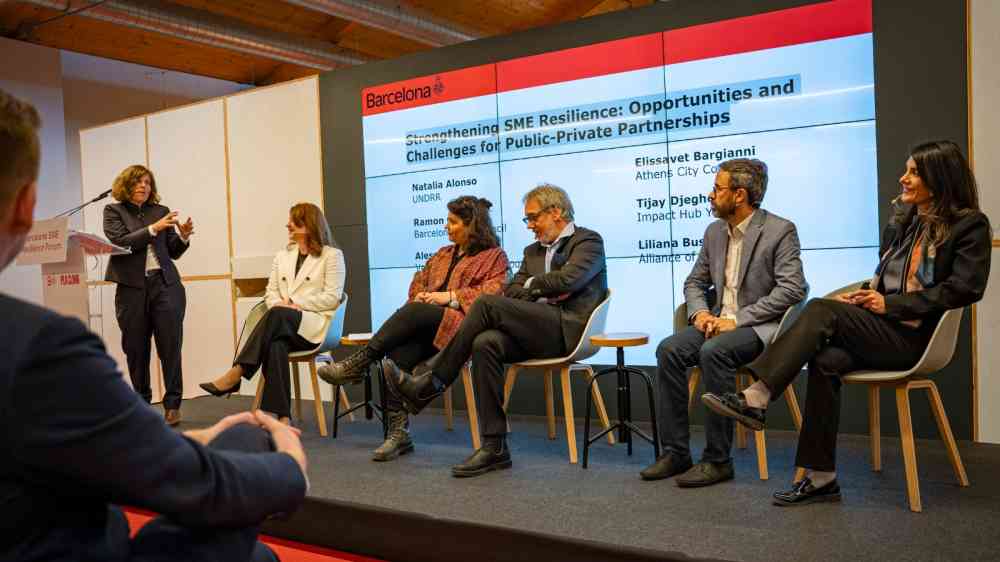
The United Nations Office for Disaster Risk Reduction (UNDRR), Barcelona City Council, and the Barcelona Chamber of Commerce convened the Barcelona SME Resilience Forum on 28–29 April, bringing together public authorities, business leaders, and other experts from across Europe to strengthen the resilience of micro, small and medium-sized enterprises (MSMEs) against disasters, climate impacts, and systemic shocks.
MSMEs account for more than 90% of businesses globally and up to 99% in the European Union. They are key drivers of employment, innovation, and local economic stability, yet remain highly exposed to escalating risks including floods, heatwaves, wildfires, blackouts, supply chain disruptions, and infrastructure failures. This growing risk landscape underscores the urgency of embedding resilience into day-to-day business practice rather than treating it as an exception.
The Forum took place against the backdrop of the anniversary of the 2025 Iberian blackout, a stark reminder of how quickly critical infrastructure failures can disrupt essential services and halt business operations. MSMEs—often the most exposed and least protected—are left particularly vulnerable when such shocks occur, despite being the backbone of Europe’s economies and communities.
Laia Bonet, Deputy Mayor, Barcelona City Council said: “This project is a very clear example of how Barcelona understands international cooperation as a practical tool to improve cities’ capacity to protect people, essential services and the economic fabric. Focusing on Barcelona, we know that climate risks are no longer a matter for the future, but of the present. One of the fundamental pillars of this strategy is the Climate Plan, an ambitious plan that foresees an investment of more than 1.8 billion euros through 2030 and places adaptation and resilience at the centre of the city’s public policies. The Climate Plan allows us to reduce vulnerabilities, protect the functioning of the city during extreme events, care for the most exposed populations and strengthen infrastructure and urban spaces in the face of current climate realities. But above all, the Climate Plan is based on a very clear idea: a resilient city is not built only with infrastructure, but also with a strong and prepared community and economic fabric. This is where the “SME Resilience” project, promoted by UNDRR and developed in Barcelona with the Chamber of Commerce, becomes especially relevant”.
“Climate change is no longer a distant threat. Its impacts are already here, and they are affecting our territories and our economies through droughts, water stress, extreme weather events and growing uncertainty, among others”, noted Josep Santacreu, President of the Barcelona Chamber of Commerce, in his keynote remarks. He added that “understanding these risks and preparing for them is essential, especially for small and medium-sized enterprises, which are the backbone of our economy”. Mr. Santacreu also called for further action, noting that “we need strong alliances between companies and public administrations, working together with a shared vision and coordinated action”.
Natalia Alonso Cano, Chief, UNDRR Regional Office for Europe and Central Asia, noted that “resilience building cannot rest on individual businesses alone. It must be embedded across systems, with governments, cities, chambers of commerce, financial institutions, insurers, technology providers, and international organizations all having a role to play in building an enabling environment and ecosystem for driving MSME resilience. MSMEs must be empowered not as passive recipients of risk, but as active agents of resilience.”
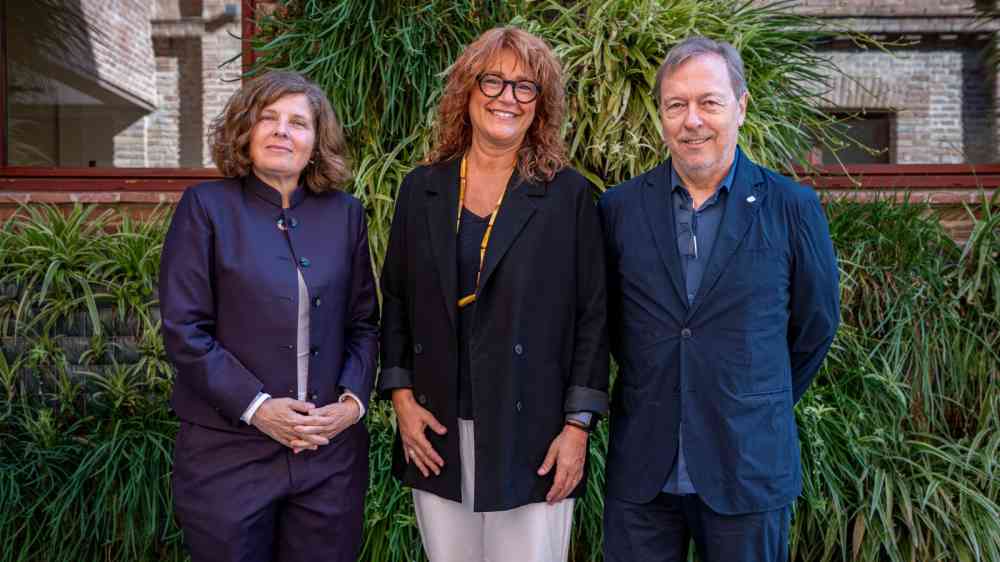
Natalia Alonso, Chief of the UNDRR Regional Office for Europe and Central Asia; Laia Bonet, Deputy Mayor, Barcelona City Council; and Josep Santacreu, President of the Barcelona Chamber of Commerce.
Barcelona as a regional reference point for disaster resilience
Barcelona has long been recognised for innovation and forward-looking urban leadership, including as the first Making Cities Resilient 2030 Resilience Hub in Europe and Central Asia. Building on UNDRR’s Strengthening the Disaster Resilience of SMEs initiative, the Forum marked a shift in commitment to sustained, city-led resilience services for businesses in Barcelona, with the ambition of developing a scalable model for replication across European cities and regions.
Over the past year, a practical SME resilience ecosystem has taken shape across the metropolitan area through collaboration between UNDRR, Barcelona City Council, the Barcelona Chamber of Commerce, and partners from business, academia, and finance. These partners have provided training programmes, business continuity planning support, crisis simulation exercises, and tailored sector guidance—strengthening coordination across institutions while embedding resilience within local economic governance.
This approach has built strong momentum, integrating resilience services into existing institutional structures rather than treating them as standalone initiatives. More than 100 SMEs have already benefited directly, alongside capacity-building support for business chambers and associations to ensure long-term sustainability.
New landscape assessment sets priorities for action
The Forum launched the Strengthening the Disaster Resilience of SMEs in Barcelona: Landscape Assessment Study, developed by UNDRR and the Barcelona City Council. Based on policy analysis, stakeholder consultations, and an SME survey, the study identifies critical gaps and opportunities for coordinated public–private action.
It also offers concrete recommendations to strengthen SME resilience through improved coordination, targeted policies, capacity-building, incentives, and better access to finance — positioning resilience as a core element of economic and urban planning.
Launch of practical tools for SMEs
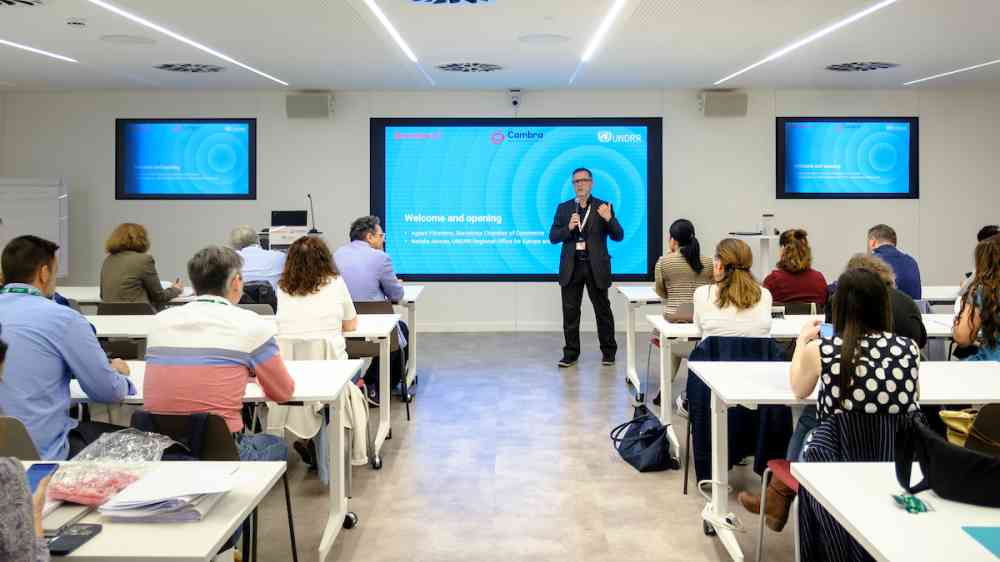
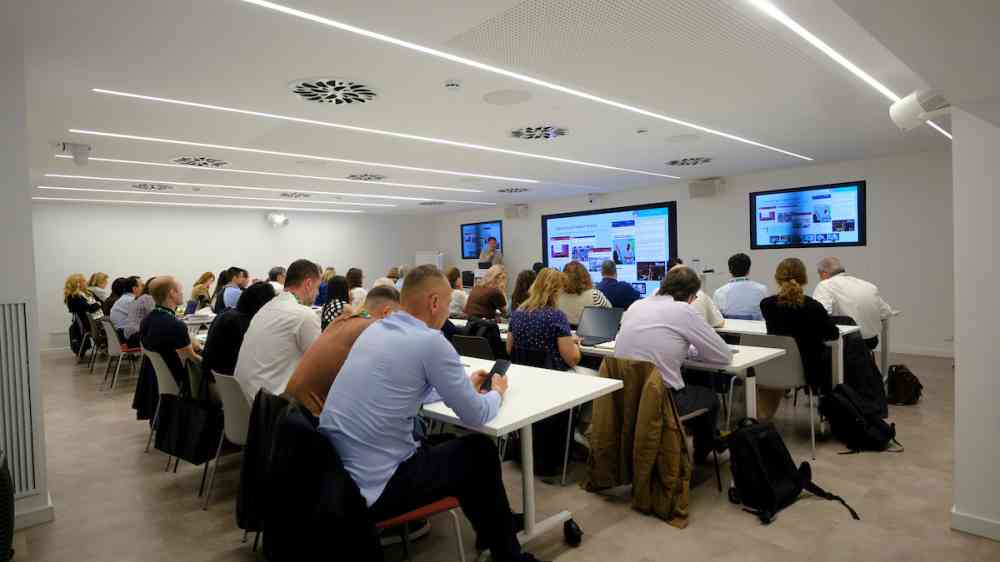
Following the high-level interventions, the Barcelona Chamber of Commerce hosted a series of practical workshop-style discussions for SMEs, business support organizations and public authorities. Aimed at supporting SMEs to anticipate, adapt and respond with greater capacity to the risks associated with climate change and other hazards, the participants were introduced to a series of tools and resources, participatory exercises and crisis simulations.
Three new practical localized guides were introduced to help SMEs prepare for, respond to, and recover from disruptions. Adapted from UNDRR global tools, they include guidance on business continuity planning for the retail and tourism sectors and crisis simulation exercises, developed with the Barcelona City Council and the Barcelona Chamber of Commerce. The third guide focuses on financing resilience and risk transfer, developed in collaboration with AGERS and the Chamber.
Participants were also introduced to the Resilience Maturity Assessment (ReMA) tool, a free self-assessment framework designed by UNDRR and the Corporate Chief Resilience Officers (CCRO) network to help organizations of all sizes assess and strengthen resilience across six core operational dimensions.
About the Project
The "Strengthening the Disaster Resilience of SMEs" project seeks to mobilize public, private and other relevant sectors of society to build SME capacity for risk-informed decision-making. The project's interventions include landscaping studies, the development of Business Continuity Plans, and training programs, ultimately benefiting at least 100 SMEs across the target cities.
About the UN Office for Disaster Risk Reduction (UNDRR)
UNDRR is the lead agency in the United Nations on disaster risk reduction. It provides leadership, expertise, and tools to enable countries to understand and act on disaster risks before they become disasters. UNDRR's work is guided by the Sendai Framework for Disaster Risk Reduction 2015-2030, which aims to achieve a substantial reduction in disaster risk and losses by the year 2030.